
Frictionless PLGthe customer journey from cold call to self-serve
We replaced a two-day cold-call purchase process with a 9-minute self-serve session. Self-install hardware reached active use faster than professional installation. A new help centre and answer bot cut install and setup support calls by 30%.
DÓNAL O'MAHONY · DIRECTOR OF UX, THEN SENIOR DIRECTOR OF UX DESIGN, CONTENT & USER RESEARCH, VERIZON CONNECT · THIS INITIATIVE 2018 TO 2020
Context
I joined Verizon Connect/Fleetmatics as Senior Director, leading UX Design, Content and User Research. During my time there, it became an easy-to-use, modern AI and IoT company.
This case study covers one initiative I led to rebuild the full small-business journey: try, buy, install, use and support.
Give a small business the option to go from first hearing about the product to actively using it without a phone call at any step.
Get self-install hardware to active use weeks faster and cheaper than professional install scheduling.
Cut the support load created by install and setup confusion, rather than just staffing around it.
- Time to buy
- 9 minsvs2 dayson the cold-call path
- Time to active use
- ~1 weekvs~6 weeksfor professional install
- Support calls
- 30%fewer support calls on the top install-and-setup questions
The customer's journey
Buying, installing, and getting help with a fleet-tracking product meant a phone call at almost every step: a sales call to buy, a professional installer to fit the hardware, a support call when something did not work.
This suited large enterprise fleets that wanted a managed service. It created friction for a small business that wanted to track seven vans and return to work.
Every step assumed a phone call. That was the product.
We mapped the complete journey: aware, try, buy, install, how to use it and support. We then rebuilt each stage as part of one service rather than treating onboarding and support as separate backlog items.

Six stages, rebuilt
Aware and try
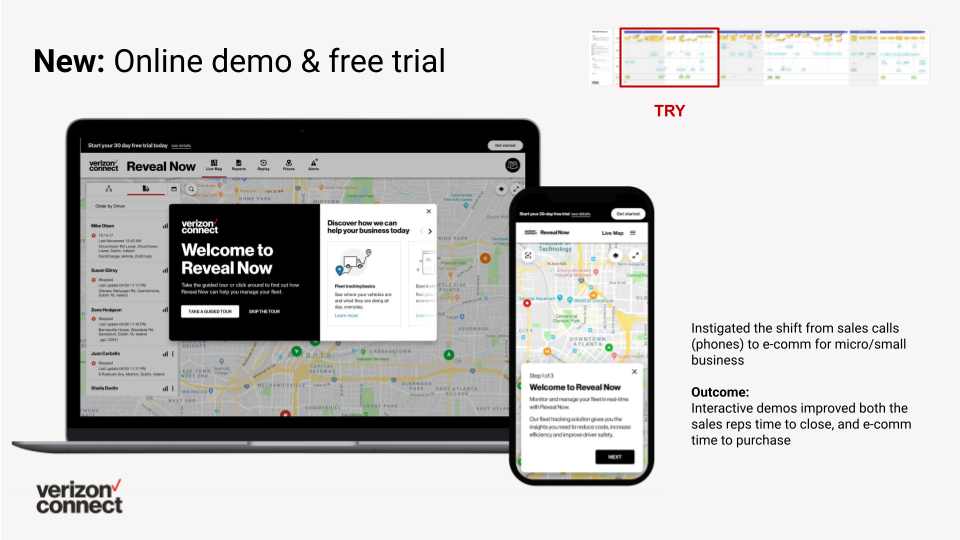
Awareness had always come from a cold call: the only way to find out more was to talk to a rep. We put an online demo and free trial in front of that, so a prospect could evaluate the product without waiting for a callback. The effect on purchase time was immediate: a median of 9 minutes online, against roughly two days for the traditional cold-call-to-contract path. Two-thirds of customers who tried the online path bought in that first session.
This was a deliberate Product Led Growth (PLG) motion. I built the measurement discipline into the team, tracking drop-off at every entry point from landing page to first trial session, and used it to keep improving the handover from marketing site to product. Trial users reached their first meaningful fleet insight before speaking to sales, and the self-serve channel became the default acquisition path for small businesses.
9 mins
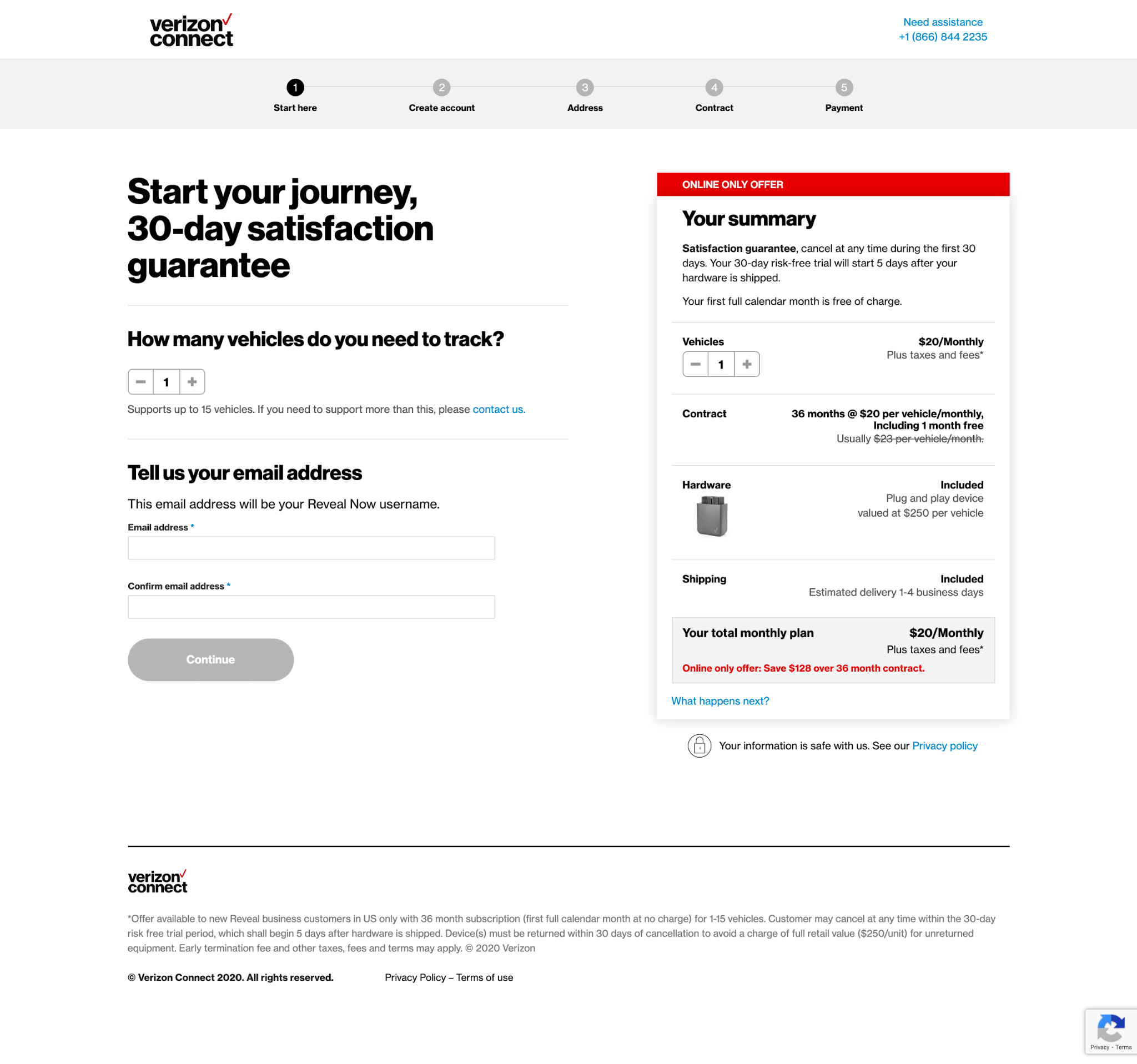
median time to buy, online
~2 days
time to buy, cold call to contract
2 in 3
online customers bought in session one
Buy and install
We paired e-commerce checkout with Reveal Starter, a self-install hardware option. The existing professional-install product remained available. Within the first year, every order under seven units moved to the e-commerce channel by default rather than a sales call.
How to use it
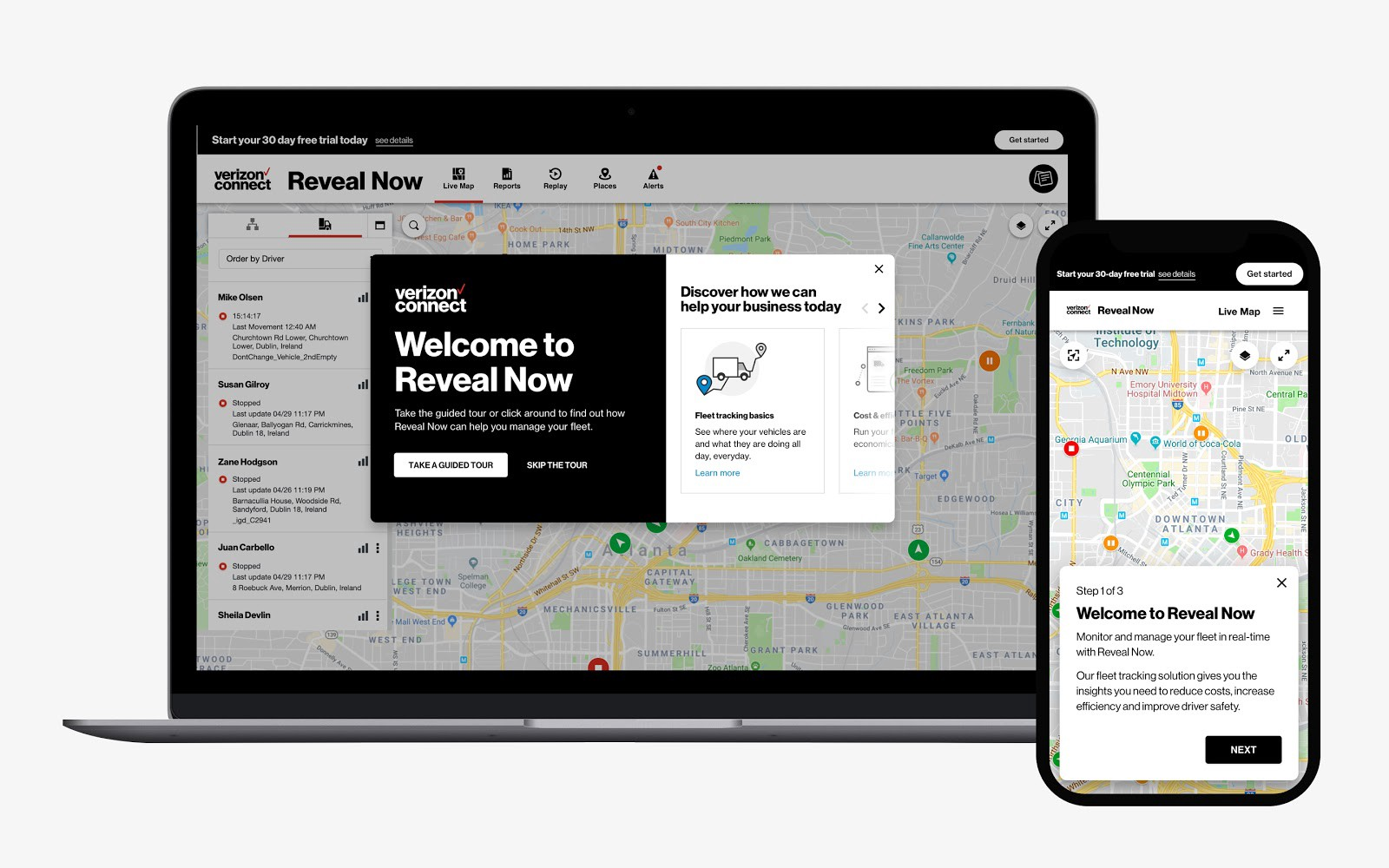
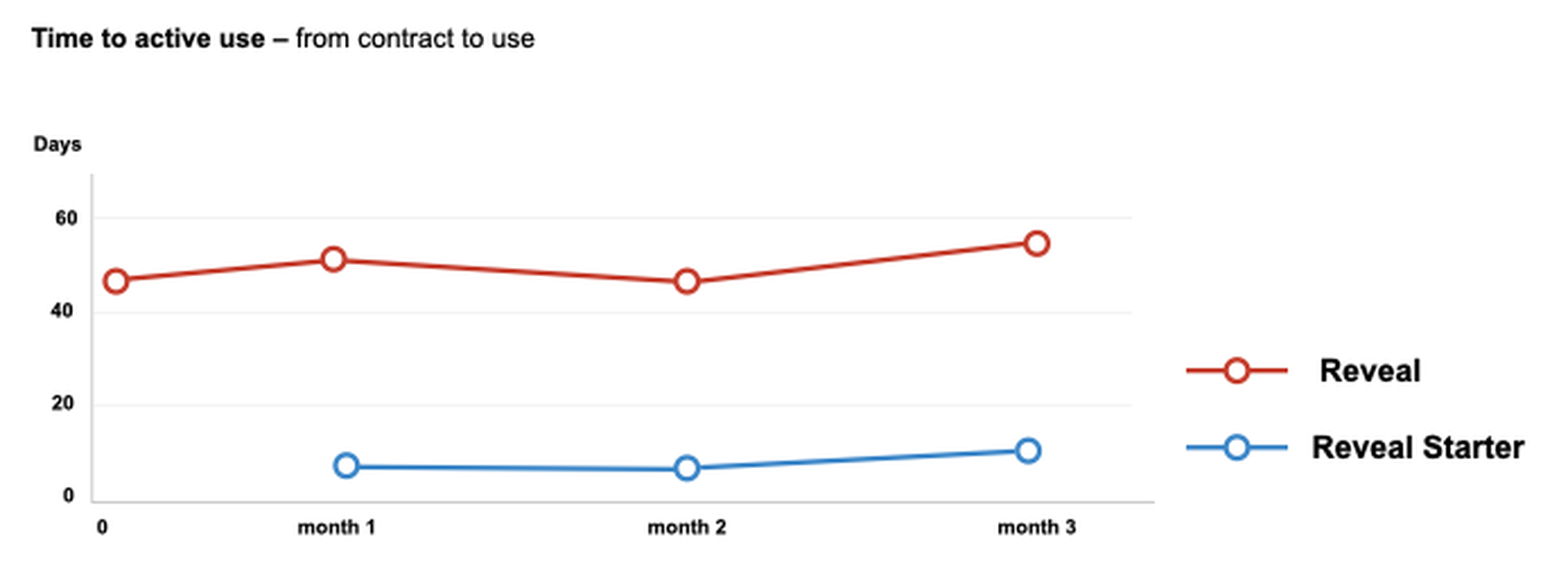
A guided in-product tour replaced the human-led setup process. It introduced the live map, vehicle status and the meaning of an idling alert. Motion design and content helped customers reach first value without a call. From contract to first real use, the self-install path took about a week. Professional installation took roughly a month and a half. This changed the default install option we recommended for smaller fleets.
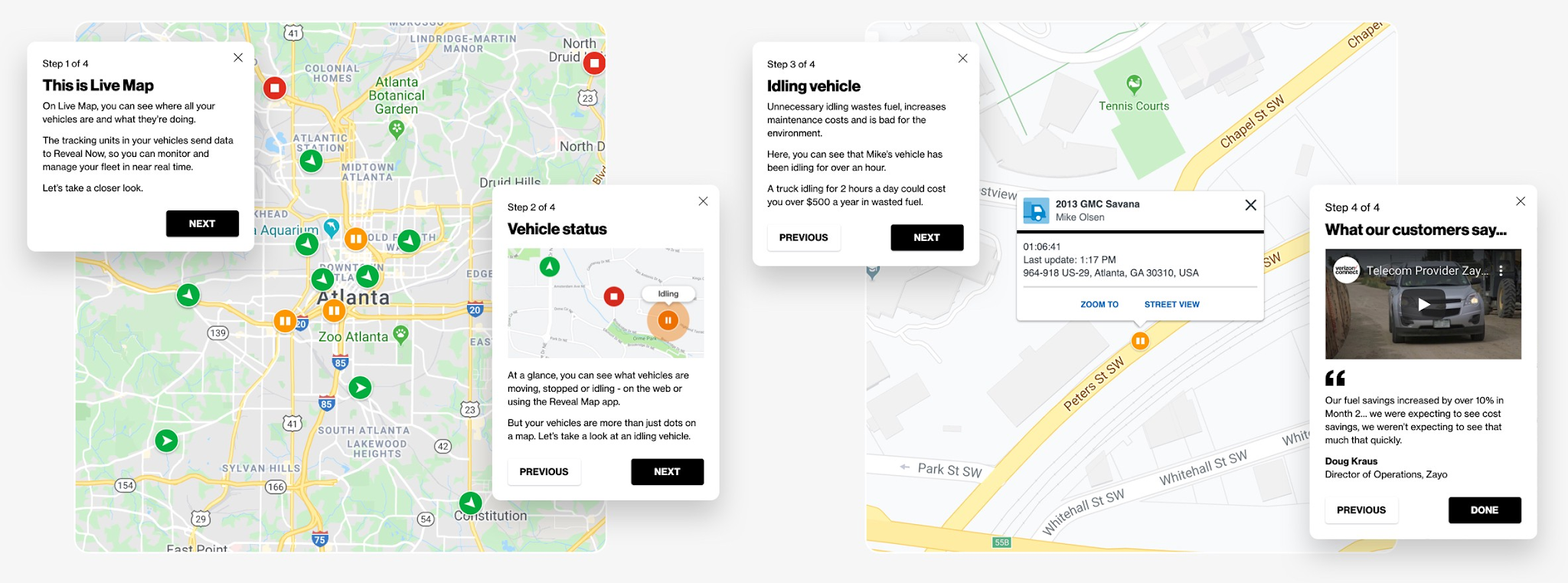
Our fuel savings increased by over 10% in month two, we were expecting to see cost savings, we weren't expecting to see that much that quickly.
Support
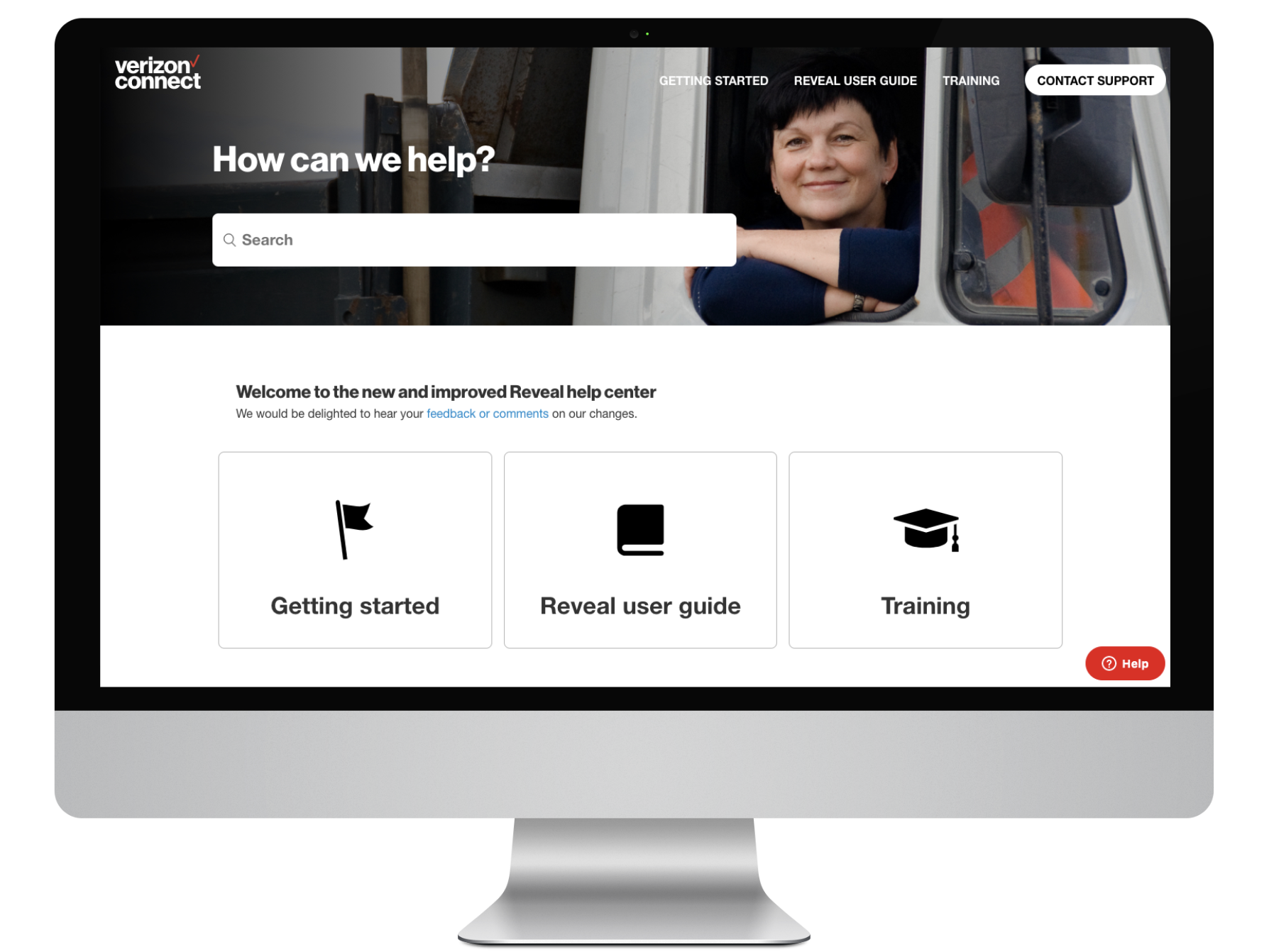
I introduced Zendesk Help Center and Answer Bot as part of the self-serve experience. We also used Pendo guides to provide contextual help when customers needed it. Together, these changes cut support calls on the top install-and-setup FAQs by 30%.
One connected map sat beneath all six stages: aware, try, buy, install, how to use it and support. Internally, we called this "easy to". Teams worked from this shared service map rather than separate roadmaps. This allowed e-commerce, onboarding, voice-of-customer and content design to develop together while we fixed the handovers between them. Research supported the work throughout. Each year, the experience team ran thousands of surveys and remote tests, alongside hundreds of interviews and field studies. We could therefore measure stages such as "how to use it" with evidence rather than instinct.
150
lab tests
100
customer field studies
900
customer interviews
1,500+
prototypes
4,000+
remote user testing
14,000+
surveys
The team
I led this experience design & vision across the multiple teams & functions, including.
- Pat Ashe
- Design Manager & Content Strategy, Help Center
- Billy Fitzgerald
- Design Lead
- John Wood
- Design Manager
- Andrew Pringle
- User Researcher
- Squad designers
- Executed improvements in their own areas across every stage of the journey.
- Cross-functional leadership
- Engineering, support and marketing partnership, so the journey held together end to end rather than breaking at the handoffs between teams.