Dónal O'Mahony
Context

I joined Contentful when its developer-focused product was still difficult for creative teams to use. My brief was to simplify the experience for non-technical users, shape the vision and strategy for the Content Management System to become an AI-powered Digital Experience Platform, and move the company into generative AI. During my time there, the platform's rating among non-technical users rose from 2.5 out of 5 to 4 out of 5.

AI Actions & Automationsbuilding AI into the content workflow

Dónal O'Mahony · VP of Product Design & Research, Contentful · 2022 to 2025 · This initiative 2024 to 2025

A small, carefully selected team turned a 2024 design sprint into the core of Contentful's 2025 AI Platform. We built AI into the content workflow itself.

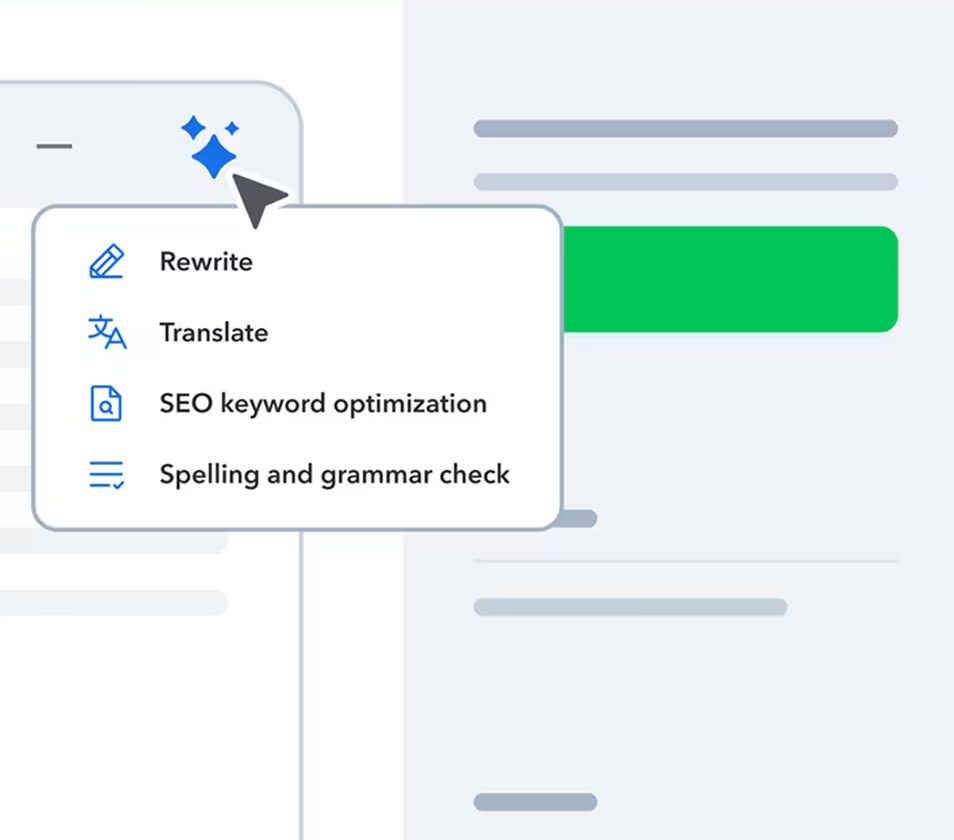
AI Actions menu open on a content entry, offering Rewrite, Translate, SEO keyword optimization and spelling checks
One AI action, on the entry, in context: the smallest unit we had to make trustworthy.
01

Picking the team, not just the problem

The first decision was who should be in the room. I did not staff the team by availability.

We applied the same approach when selecting partners in Product Management and Engineering. We chose a small team for the skills and working relationships the problem required, rather than for who was free that quarter. That decision came before any screen design and proved critical.  In Product Design Fabian Schulz joined first, for his vast technical and creative range to prototype AI behaviour. Carlos Yllobre to manage the designers and lead from discovery to launch, and Rui Marcalo to unify the interaction model and visual language across a platform outgrowing a single feature. Sarah Roediger joined specifically for Automations and Workflows, knowing the product's internals better than almost anyone else in design. 

Method02

The design sprint, and the research that never stopped.

We started with a week-long design sprint, not a specification. The full tiger team tested with users every day. This evidence settled the chat-versus-inline decision. Daily iteration produced a clear, ranked list of AI features based on customer demand rather than ease of delivery.

The research continued after the sprint. Michelle Proskell ran user research and testing through most of the project's life. A group of beta customers, our "design partners", provided usage feedback as the product developed. This continuous evidence allowed Rui and Carlos to identify and confirm the preference for inline interactions before launch.

The pivot03

The decision, and the call I agreed with

Every content team we spoke to already had access to AI. What none of them had was AI that showed up inside the work they already did.

Drafting, translating, approving, publishing. Not a separate tool they had to remember, open, and copy in and out of.

I favoured global assistants: one conversational entry point that could handle any task. I still see that as the destination. During the sprint, Rui and Carlos showed that the daily testing pointed elsewhere. Customers wanted contextual AI within the workflow, not a prompt window. Teams were not ready to hand intent to a chat interface before seeing a single AI action they could trust on one field. I agreed with the call and supported it.

How we knew

It was the right call. We started with the smallest trustworthy AI action.

The direction did not come from a whiteboard. It came from designers sitting in testing sessions, watching teams hesitate in front of a blank chat prompt and light up in front of a translate button already sitting on the field they were editing.

We changed the sequence. First, build the smallest trustworthy AI action and prove it in a real workflow. Then build the wider system and conversational layer around it.

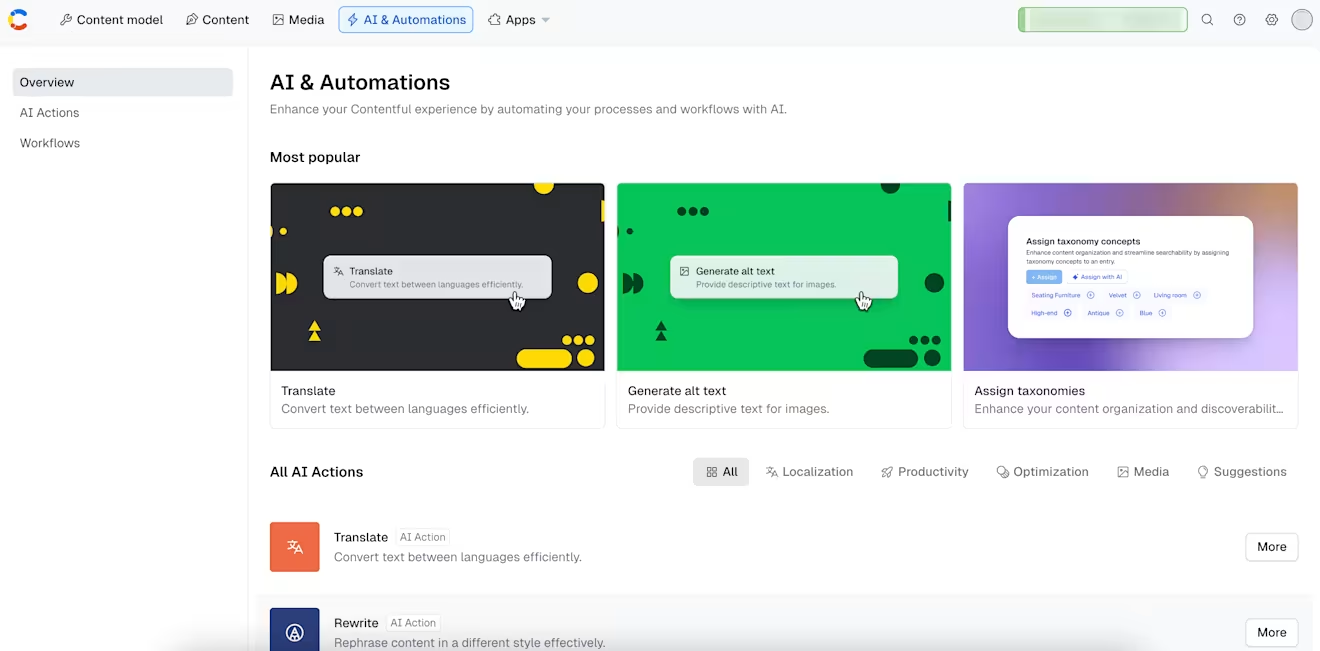
AI and Automations home in Contentful, listing popular actions such as Translate, Generate alt text and Assign taxonomies
AI and Automations as its own home in the product, not a hidden setting.
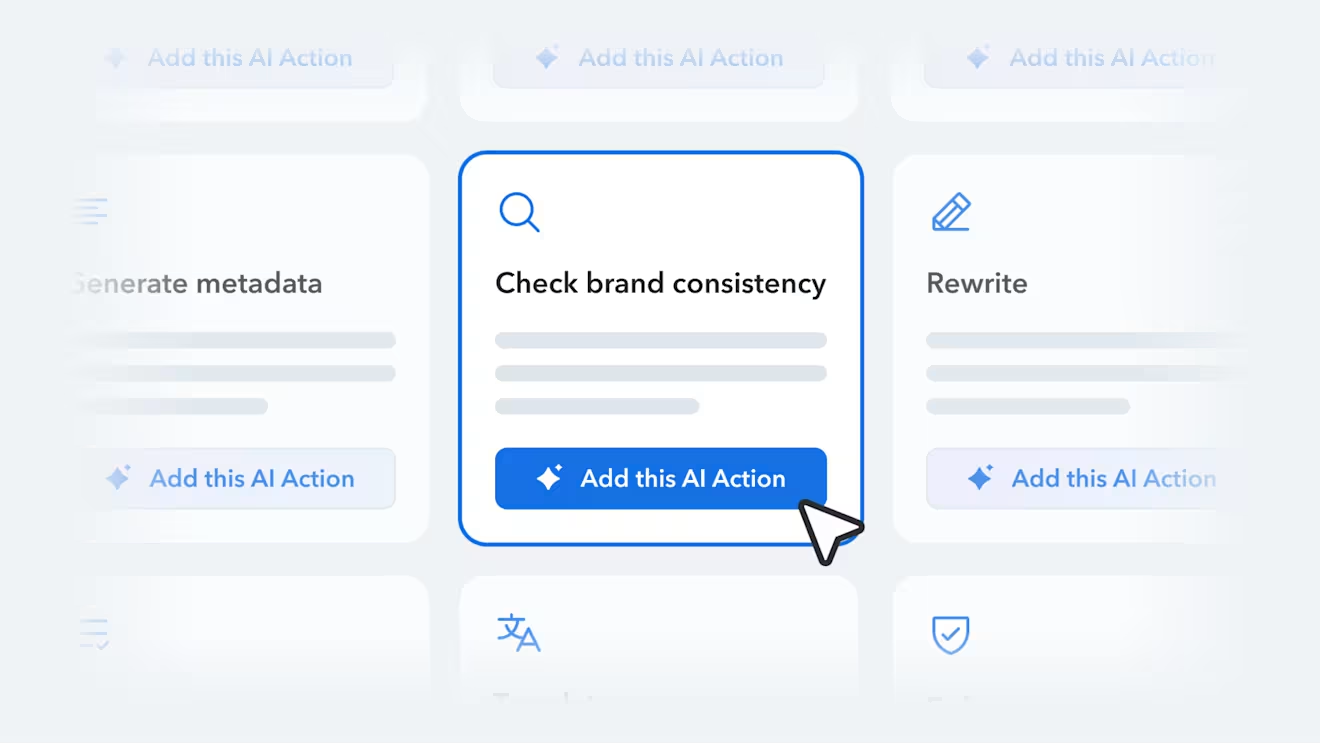
A library of ready-made AI Actions including brand consistency checks, metadata generation and rewriting
Purpose-built actions, not a blank prompt box.
04

What we built

AI Actions

A single, purpose-built AI operation directly on the content entry (translate, optimise, rewrite), aware of the entry's own context: locale, brand voice, live data pulled from connected systems. The output did not read like generic AI copy, because it was not written in a vacuum.

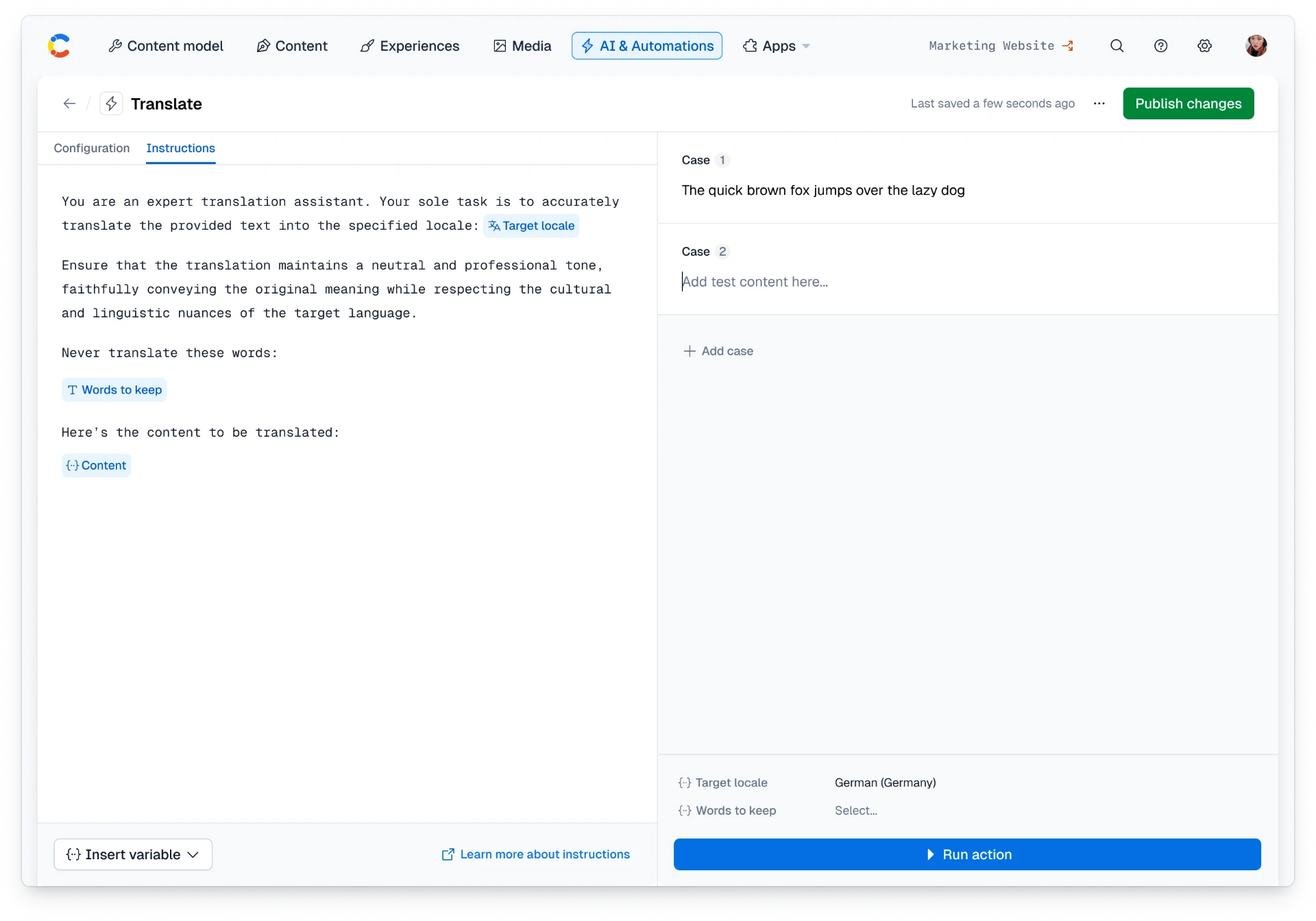
The Translate AI Action editor: instructions with inserted locale and words-to-keep variables on the left, test cases and a run action button on the right
The action editor: instructions with typed variables on the left, live test cases on the right, so an author could prove an action before trusting it.
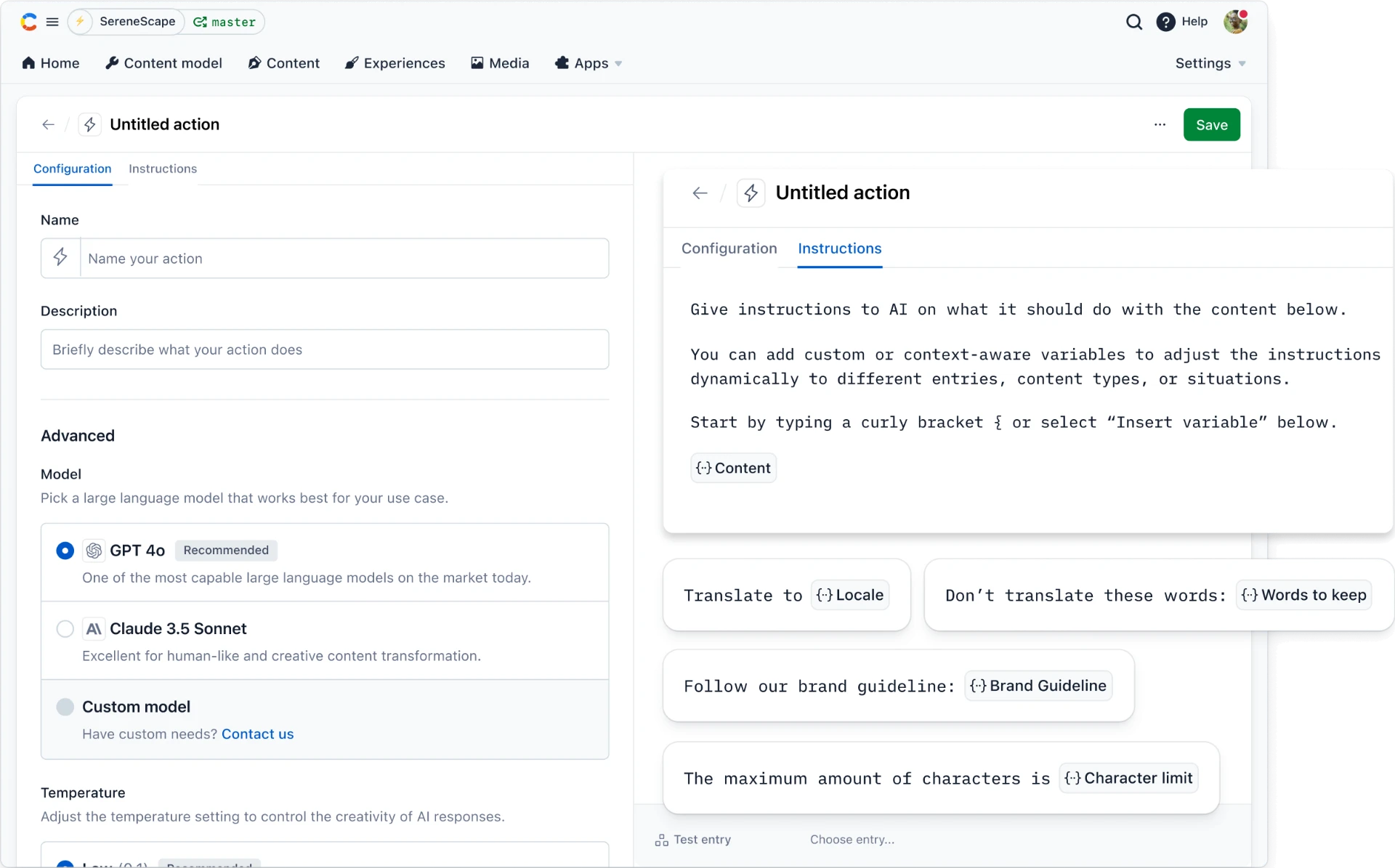
AI Action setup screen: configuration with model choice, and an instructions tab with insertable variables
Configuration and instructions, with variables for locale, brand guideline and character limits.
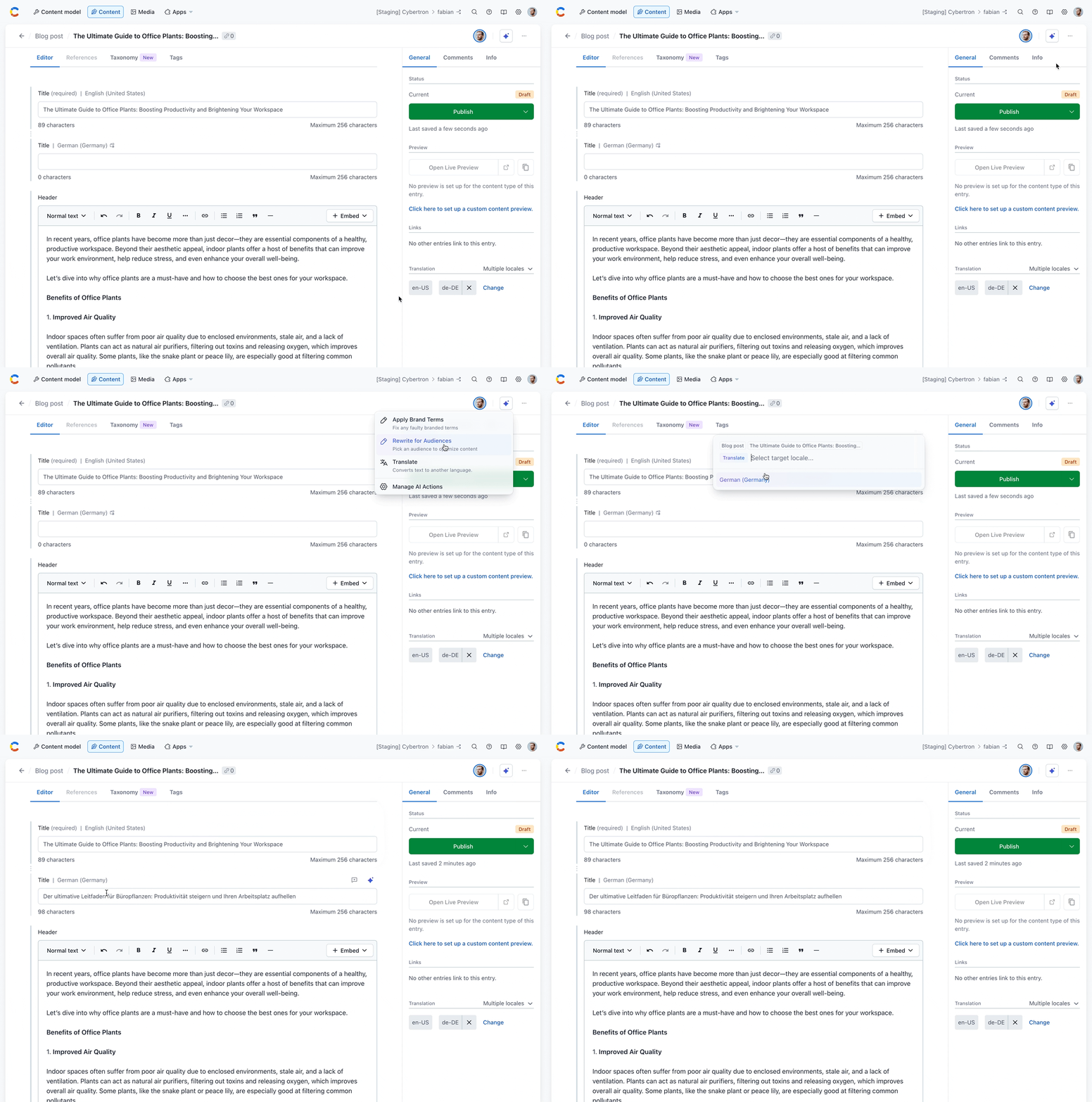
A blog post entry in the editor with the AI panel available beside the fields and an empty German title waiting to be filled
Where it had to land: the entry an author already had open, with the second locale still empty.

Automations & Workflows

This handled the more complex operational work. Teams could build a no-code route from draft to publication, with a trigger, automated steps and human approval at the points they chose. An AI Action could run as one step in that route. This removed the email threads and Slack messages used to chase reviews.

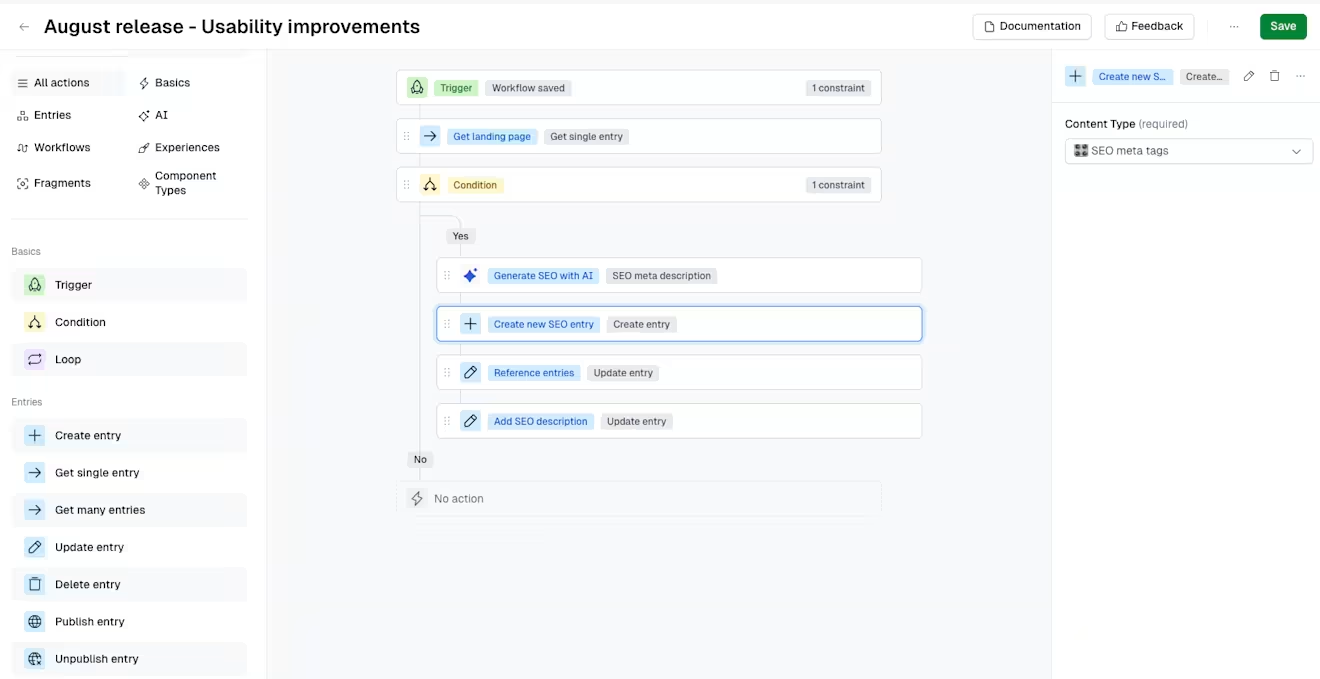
Workflow builder canvas with a trigger, a condition branch, a Generate SEO with AI step and follow-on entry updates
The no-code builder: triggers, conditions and AI steps composed on one canvas.
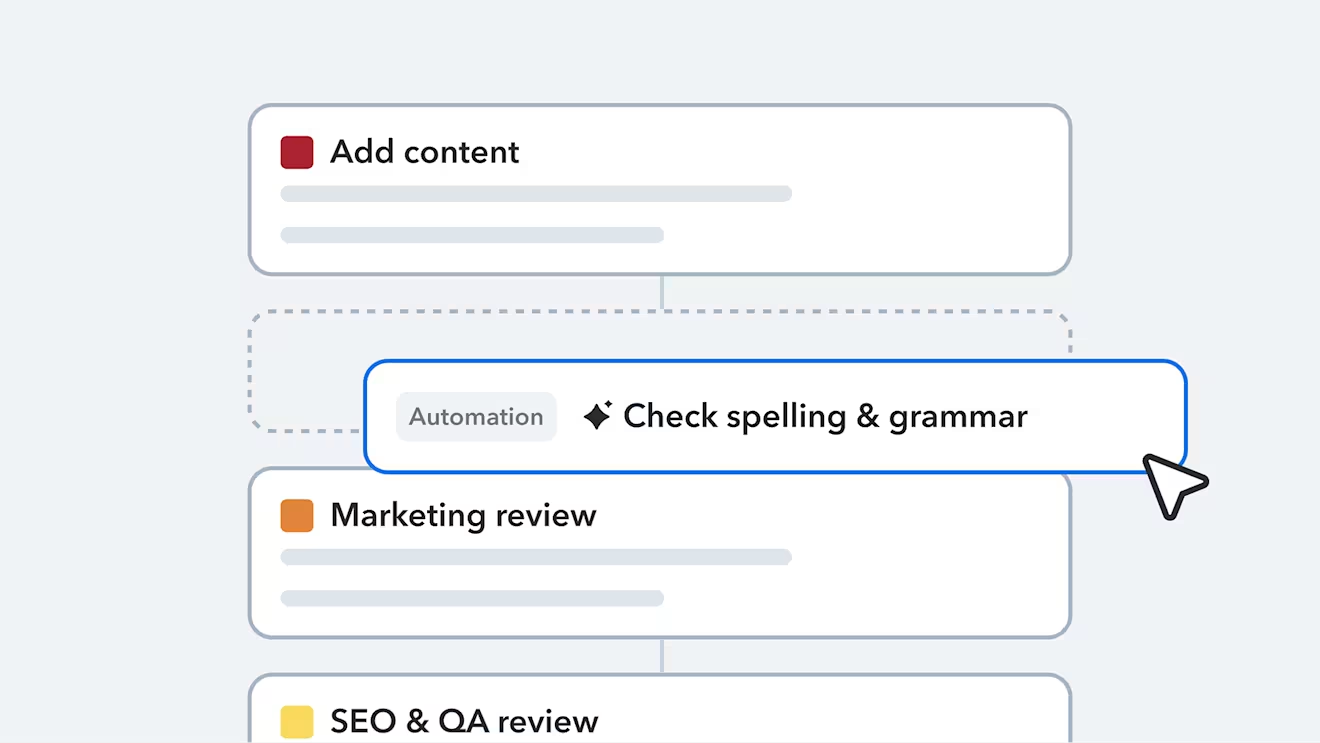
A workflow with an automation step, check spelling and grammar, dropped between add content and marketing review
An AI step slotted between two human ones.
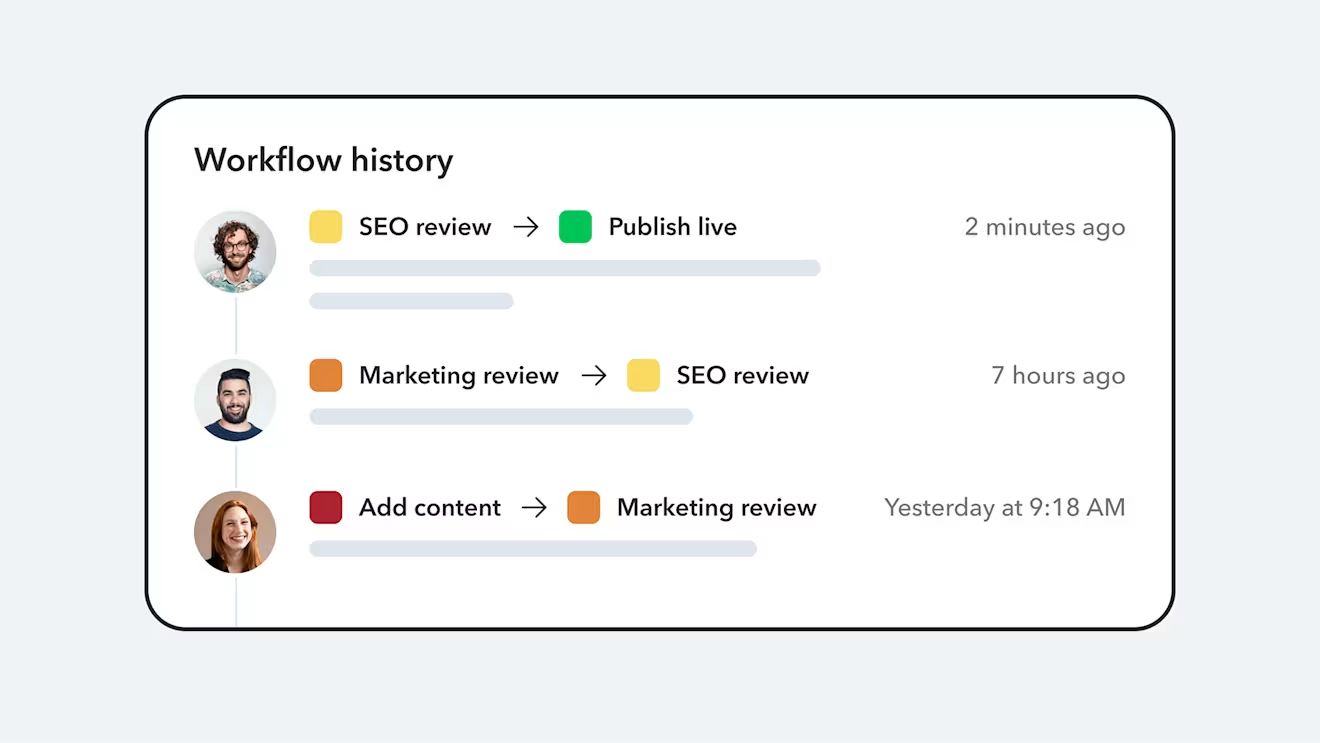
Workflow history listing who moved content between review stages and when
History as accountability: who moved what, and when.
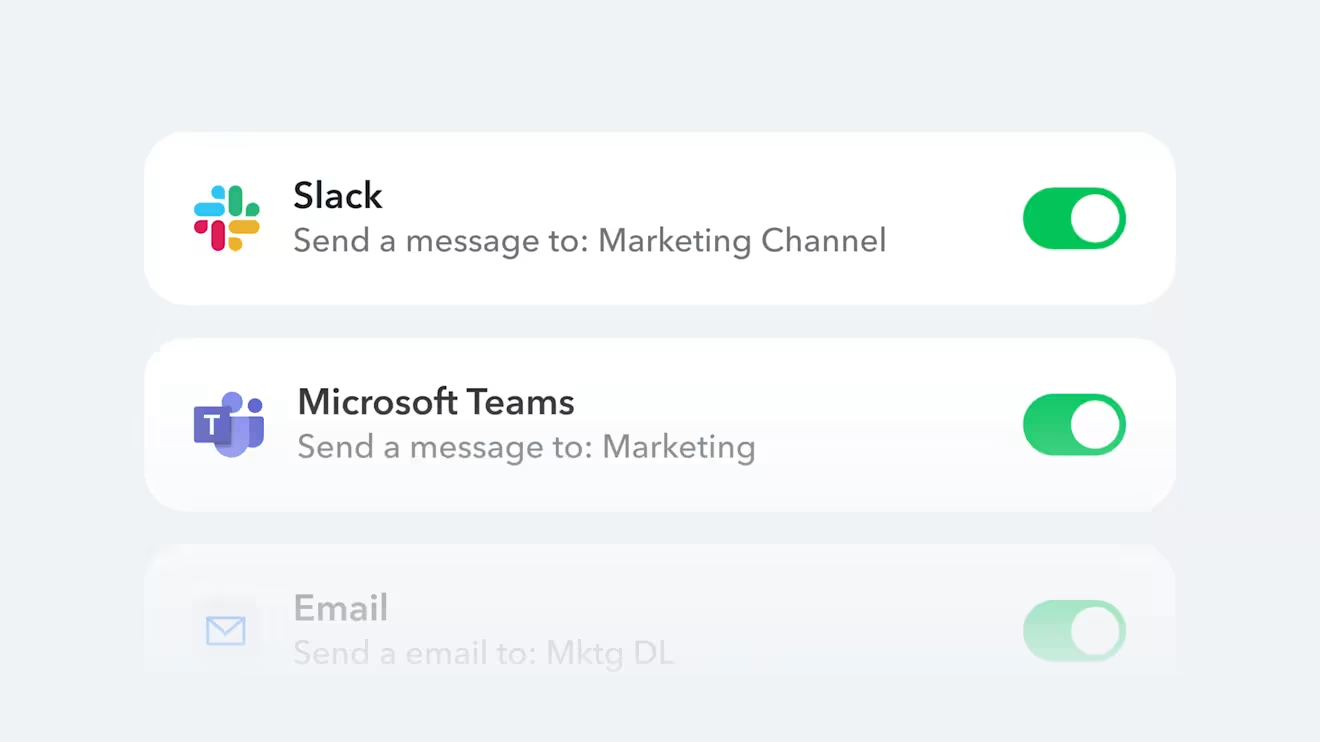
Toggles for notifying Slack, Microsoft Teams and email when workflow steps change
Handoffs land where the team already works.
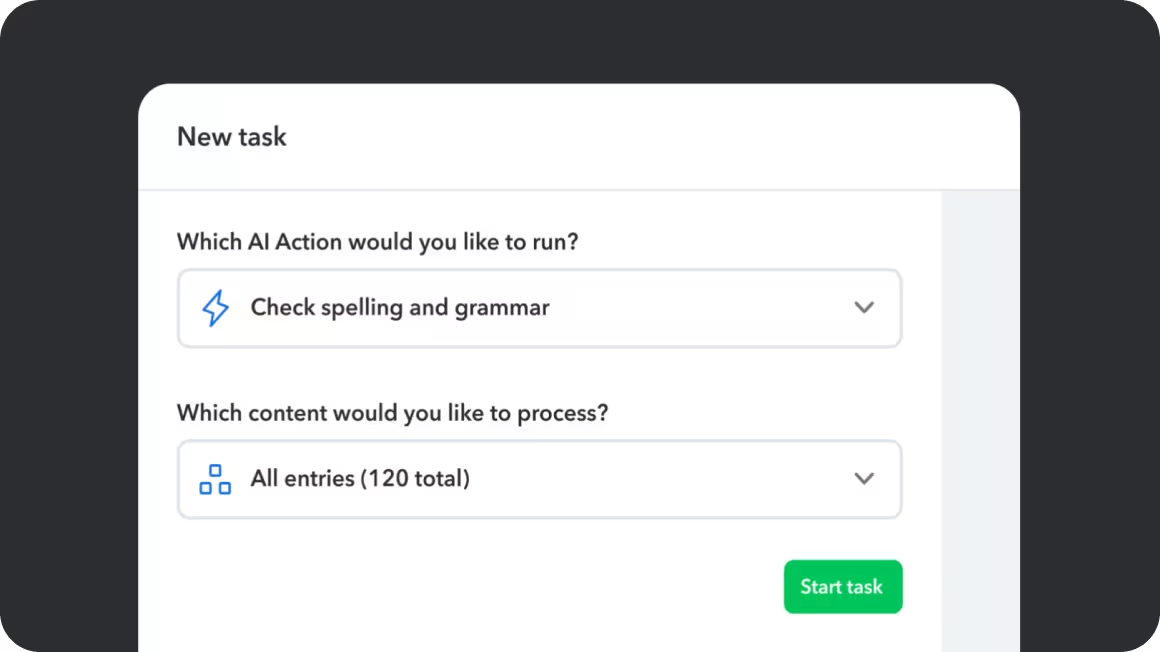
New task dialog running one AI Action across all 120 entries at once
Bulk edits, one review: the operational unlock behind Arion Bank's weeks of saved work.
05

Proof in the field

Bossard

16 languages · 38 locales

€27K and roughly 600 translation hours saved during their replatform, then a further 1,000 hours over four months once AI Actions was live.

We just added Workflows, and it has made a big improvement. Instead of communicating handoffs via email or Microsoft Teams, we can automate it step by step: the content creator drafts content, then it is passed to the content master for review, then it goes to AI Actions for translation, then it goes to a local marketer to approve and publish.

Corina Sulzberger, Online Marketing Projects, Bossard

Arion Bank

Icelandic → English, in bulk

Bulk translation at scale, saving an estimated €15K in three months.

It has allowed us to bulk translate content… saving us days, or, more likely, weeks of work.

Tryggvi Freyr Sigurgeirsson, Front-end Developer, Arion Bank

Docusign

AI Actions on AWS Bedrock

Routine updates dropped from two weeks to five minutes; 7,000 live pages localised across 52+ languages, contextualised with Docusign's own business data.

In an AI-filled world, it is really important to give your team a framework for utilizing these tools, not only does this help them feel more comfortable working with them, but it ensures the output aligns with your strategy. AI Actions enables that.

Andy Rossi, Senior Product Manager, Docusign
06

Three things I would keep doing

Staff for chemistry, not just coverage

Team composition was central to maintaining pace as the brief changed.

Ship the smallest trustworthy unit first

Automations worked because users already trusted AI Actions to run unattended within them.

Let the customer's own words carry the proof

Corina's account of her team's handoff before and after provides stronger evidence than an internal metric.

08

Credits

Fabian Schulz
A true UX unicorn, a technical and creative genius ... Mr AI Actions
Rui Marcalo
Unified the vision and UX across the emerging AI platform
Carlos Yllobre
Managed the designers and stakeholders from start to finish.
Sarah Roediger
The institutional and deep product knowledge to make workflows a reality.

This work depended on all four of them. My role was to form the team, connect the work, unify the Product Design vision, align the strategy with Product Management and Engineering leadership, and give the designers room to deliver.